

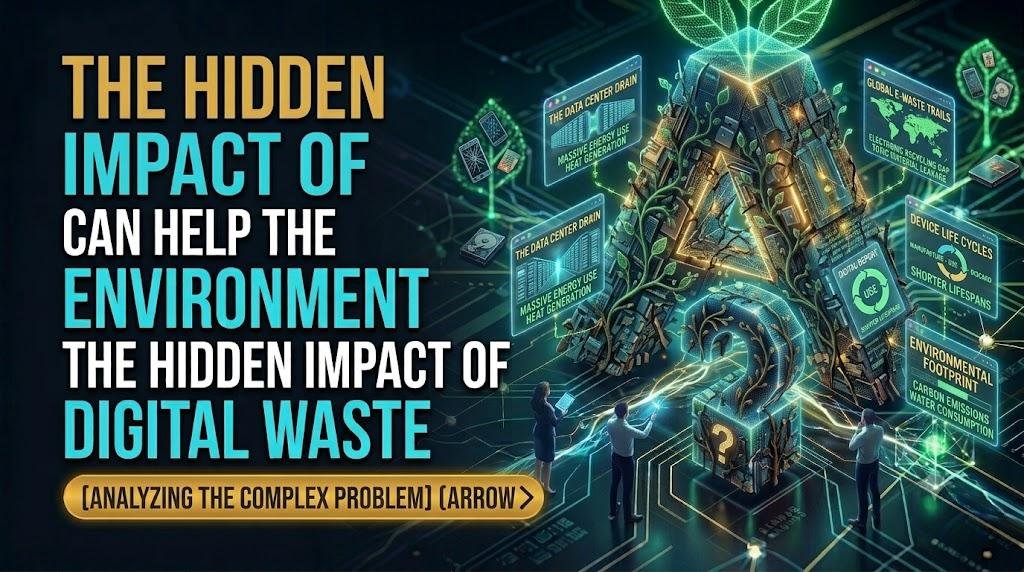
Do you know The Hidden Impact of Digital Waste?
You clean your house. You clean your room. But when did you last clean your digital life?
We talk about saving environment a lot. Use less plastic. Plant more trees. Save water. But nobody talks about digital waste. And digital waste is also hurting environment. Silently. Every single day.
Most people think — data is digital. It has no physical impact. It is just files and photos sitting in cloud. How can it hurt environment?
But that thinking is wrong. Let’s find out why. If you already know what digital waste is then skip to impact section. If you don’t know then this part is for you.
Table of Contents
What is Digital Waste?
Digital waste is data that exists but is never used. Old photos. Duplicate files. Spam emails. Unused apps. Old WhatsApp videos. Screenshots from 2019. All of this is digital waste.
Now you think — okay but it is just sitting in my phone or Google Drive. What is the problem?
The problem is where it actually sits.
Data stored in cloud is kept on servers that run on electricity 24 hours a day. Even if the files are never opened again. Server is still running. Still using power. Still producing carbon.
Like think — you have a fan running in an empty room. Nobody is inside. But fan is still on. Using electricity. Wasting energy. Digital waste is exactly like that. But on a massive global scale.

How Big is This Problem Actually?
This is the part that surprised me the most when I read it.
Dark data — information that is collected and stored but never used — generates more than 5.8 million tonnes of CO2 every year. That is roughly equal to emissions of 1.2 million cars running for one full year.
1.2 million cars. Just from data nobody uses.
Global data centers are responsible for about 1 to 1.5 percent of total electricity use worldwide. Emissions comparable to the whole airline industry.
Airline industry produces massive carbon. And data centers match that. Just to store our files and run our apps.
And this could double by 2026 with growing use of cloud storage, AI, and streaming.
More data. More servers. More electricity. More carbon. More damage to environment.
And most of that data? Nobody is using it.
What Kind of Digital Waste Are We Talking About?
Let’s look at specific things in your daily life that are causing this problem.
Emails
How many unread emails do you have right now? 500? 2000? More?
Every email sitting in your inbox is stored on a server. Every spam email that you never opened. Every promotional email from some website you visited once. All stored. All using energy.
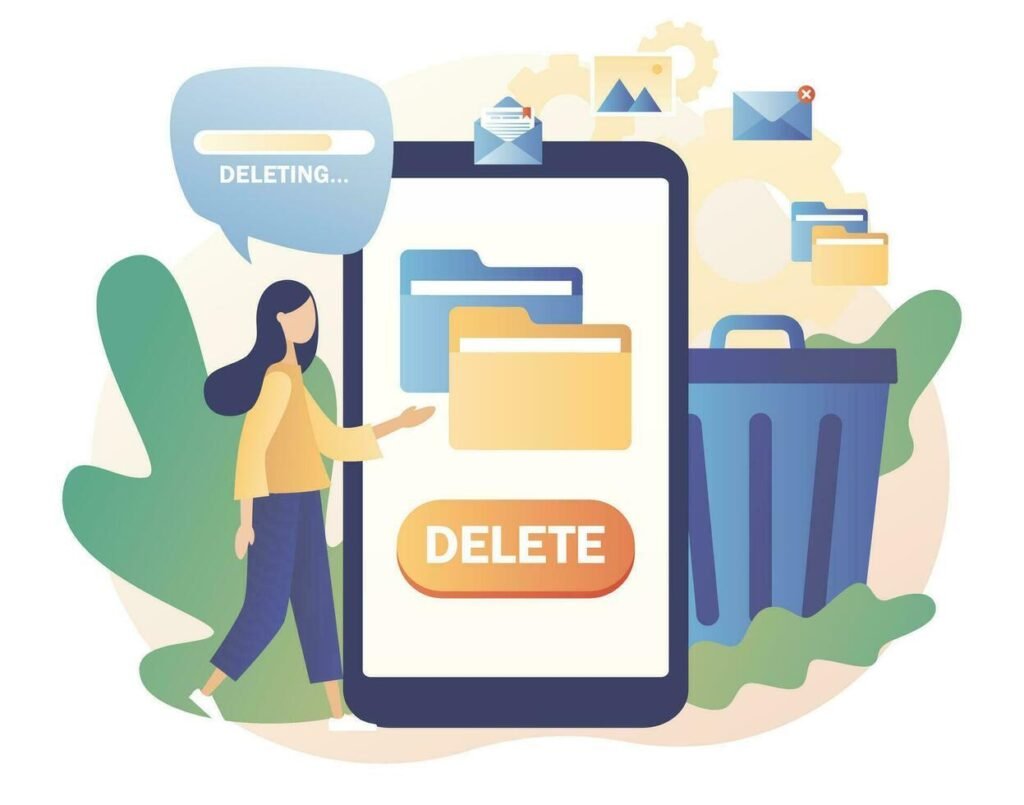
Deleting unused files and emails is one of the easiest ways to reduce your digital footprint. These actions lower energy use almost instantly.
You can use : Google support
Photos and Videos
Open your gallery right now. How many duplicate photos? How many blurry shots? How many videos you took once and never watched again?
If you delete 1 GB of unnecessary data you can prevent about 200 grams of CO2 emissions per year. Source — German Federal Environment Agency.
200 grams per GB. Sounds small. But multiply that by millions of people storing hundreds of GBs of useless data. Number becomes very big very fast.
WhatsApp and Telegram Media
Check your WhatsApp storage. You will find GBs of forwarded videos. Memes from 3 years ago. Good morning images from relatives. All downloaded automatically. All stored. All using space on your device and backup servers.
Old App Data and Unused Apps
Apps you downloaded once and never opened again. Apps that run in background. Apps that backup data automatically to cloud. All using server space. All using electricity.
Real World Action on This
This is not just theory. People are already taking action on this globally.
Digital Cleanup Day 2026 had 386,000 participants across 44 countries. Together they deleted 2.3 million gigabytes of unnecessary data. And prevented an estimated 932 tonnes of CO2 emissions annually.
386,000 people. Just deleting old files. Preventing 932 tonnes of CO2.
That is the power of cleaning digital waste.
In France alone as part of the campaign more than 3000 electronic devices were repaired reused or donated. And 289 tonnes of electronic waste were responsibly processed.
One country. One cleanup day. That much impact.
What Can You Do Right Now?
Simple steps. No special skills needed. Anyone can do this.
Clean your email inbox.
Unsubscribe from promotional emails. Delete old emails in bulk. Empty trash folder. If you have 10,000 emails — even deleting half makes real difference.
Delete duplicate and blurry photos.
Go through your gallery. Delete duplicates. Delete blurry shots. Delete screenshots you do not need. Even deleting 5 GB of old photos prevents 1 kg of CO2 per year.
Clear WhatsApp media.
Go to WhatsApp → Settings → Storage and Data → Manage Storage. You will find GBs of media you never asked for. Delete it all.
Delete unused apps.
Go through your phone. Every app you have not opened in 3 months — delete it. Less apps. Less background data. Less server backup. Less energy used.
Empty cloud storage trash.
Google Drive, Google Photos, Dropbox — all have trash folders. Files you deleted are still stored in trash. Still using server space. Empty the trash properly.
Unsubscribe before deleting.
Do not just delete promotional emails. Unsubscribe first. So they stop coming. Less future emails. Less future storage needed.
What may seem like an abstract idea — deleting old files clearing out unused apps streamlining storage — actually has real world consequences for the planet.
It is not abstract. It is real. And it is in your hands.
Is This Really Worth Doing?
Some people think — I am one person. What difference will I make?
But think about it differently.
386,000 people deleting data together prevented 932 tonnes of CO2. That started with one person deciding to clean their digital life.
And digital cleanup has another benefit also. Your phone runs faster. Your storage bill goes down. Your backup is quicker. Your device lasts longer.
Extending device life by even one year significantly reduces environmental impact. And reducing unnecessary data storage is usually the fastest win — it can be done in minutes.
Good for environment. Good for your device. Good for your wallet. Three benefits from one simple action.
My Opinion
We recycle plastic. We switch off lights. We use less water. But we never think about our digital habits and environment.
All digital data is not bad. But unnecessary data that nobody uses — that is just waste. Same as leaving lights on in empty room. Same as running tap water for no reason.
The difference is — cleaning digital waste is much easier than other environment actions. You do not need to go anywhere. You do not need to spend money. You just need 30 minutes and your phone.
Going digitally greener in 2026 is really about being mindful of the choices we make. Technology can help us live more sustainably but only if we use it thoughtfully.
Your digital life has a carbon footprint. And you can reduce it today. Right now. Without leaving your room.
Conclusion
All digital data is not bad. But unnecessary data that sits forever on servers — it is like plastic in ocean. Invisible. But harmful.
Digital Cleanup Day 2026 proved that collective digital action can scale globally and deliver measurable environmental results. What started as a symbolic initiative is now evolving into a structured framework for digital responsibility.
So next time you see your phone storage is full — do not just buy more storage. Clean first. Delete what you do not need. Unsubscribe from what you do not read. Empty your trash properly.
Small action. Real impact.
Now tell me — how much storage did you free after reading this? And will you start cleaning your digital waste regularly? Tell me in comments because it may be useful for others.
